Beyond the Screen: How the Latest Technological Frontiers Are Restructuring Reality

For years, digital progress was defined by incremental upgrades: faster consumer microchips, brighter displays, and thinner smartphones. Today, however, we are witnessing a fundamental departure from screen-bound computation toward deeply integrated, multi-modal technological ecosystems. The latest technological breakthroughs do not simply change how we look at digital information; they alter how computation interacts with the physical world, biological matter, and the fundamental infrastructure of global industry.

As we move beyond traditional software paradigms, a new wave of interdisciplinary innovations is quietly redefining daily life. To truly understand the current technological shifts, we must examine the convergent advancements taking place across edge systems, autonomous orchestration, physical artificial intelligence, and revolutionary material science.

1. Autonomous Agentic Orchestration and Multiagent Networks

The narrative around artificial intelligence has shifted rapidly from simple conversational chatbots to autonomous agentic systems. Rather than operating as static tools waiting for manual prompts, autonomous agents are software entities … Read more

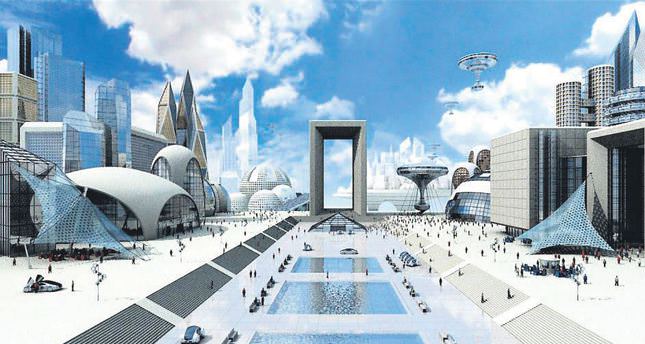
Beyond Automated Switches: The Shift Toward Truly Context-Aware Smart Home Systems

For years, the phrase “smart home technology” conjured images of connected light bulbs, app-controlled thermostats, and voice-activated speakers responding to explicit commands. While these innovations offered a novel level of convenience, they represented connected automation rather than true domestic intelligence. The current evolution of smart home technology marks a fundamental shift away from manual remote control toward context-aware, predictive living environments that operate autonomously in the background.

By moving beyond simple scheduling and app interfaces, next-generation domestic systems are transforming residences into reactive, energy-efficient ecosystems. These environments adapt to individual human behavior, optimize resource consumption, and enhance home security without demanding constant input from occupants.

1. Predictive Automation and Ambient Sensing

The primary limitation of traditional smart home setups is their reliance on active user initiation. Setting timers, configuring complex routines, or speaking commands to an assistant still requires manual effort. Modern smart environments overcome this through advanced … Read more

Beyond the Silicon Paradigm: How Next-Generation Technologies Are Redefining Modern Life

For decades, the story of modern technology was largely written in silicon, measured by microchip processing speeds, screen resolutions, and battery capacities. However, as traditional hardware scaling reaches its physical limits, a fundamental shift is occurring across the global technological ecosystem. We are entering an era driven not merely by faster computers, but by fundamentally new computing architectures, biological integrations, and decentralized energy paradigms.

This shift marks a move away from reactive technology—devices that simply wait for human input—toward proactive, highly integrated systems that operate seamlessly within our physical and biological environments. To truly grasp how the next wave of innovation will transform our daily existence, we must examine the breakthrough disciplines quietly reshaping the digital and physical world.

1. Ambient Intelligence and Neuromorphic Hardware

Traditional computing relies on central processing units that handle instructions sequentially, drawing significant electrical power and generating vast amounts of heat. Neuromorphic computing, however, takes … Read more

Evaluating Reliable HOA internet solutions and COA telecom provider Options

The digital landscape within common interest communities often shifts from a convenience to an essential utility over time. For residents living in managed associations, the expectation for high-speed, consistent connectivity typically grows in tandem with the complexity of modern households. As more daily tasks—from remote work to smart home management—move online, the infrastructure supporting these activities becomes a foundational element of the living experience.

Understanding how a community’s digital infrastructure is managed requires looking beyond the initial setup phase. The journey of managing connectivity involves distinct stages of evaluation, integration, and ongoing refinement.

Assessing Connectivity Needs Early in the Ownership Experience

When residents first join a community, the existing internet infrastructure is often an overlooked feature. At this stage, the primary goal is to understand what is currently in place and how it aligns with personal usage habits. Many homeowners discover that their requirements for data throughput, latency, and reliability … Read more

Optimizing Reach with a display marketing agency and marketing automation platforms

The trajectory of a digital presence rarely moves in a straight line. It tends to evolve from a series of isolated experiments into a cohesive system that generates predictable outcomes. For businesses aiming to build lasting authority and reach, this evolution usually occurs in predictable stages, shifting from manual effort to sophisticated, data-informed orchestration.

Laying the Foundation for Integrated Outreach

In the earliest phase, the primary challenge is visibility. Many organizations begin by testing various channels to see which ones resonate with their intended audience. This stage is often defined by experimentation and a high degree of manual oversight. A business might launch a single campaign, track a few basic metrics, and then adjust its approach based on what seems to work.

During this developmental period, the objective is to establish a reliable connection between the brand’s messaging and the people most likely to engage with it. Engaging a display … Read more