The evolution of technology is fundamentally a story of increasing connection. We are rapidly moving past the era where interaction with machines meant complex commands and cumbersome interfaces. Today, the most critical advancements are focused on creating a seamless bridge between people and machines—a frictionless layer that allows humans to communicate naturally, intuitively, and effectively with the artificial intelligence and complex systems that increasingly power our world.
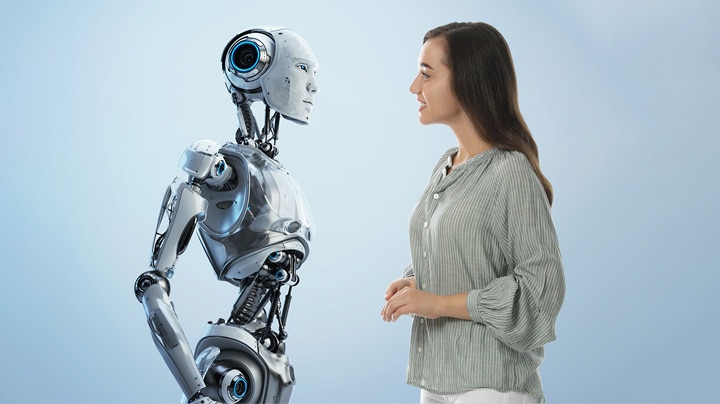
This bridge is not a single technology but a dynamic ecosystem encompassing everything from natural language processing to brain-computer interfaces. Understanding the components and implications of this seamless interface is essential for navigating the future of work, life, and communication.
The Foundation: Moving Beyond the Keyboard
For decades, the keyboard and mouse were the primary translators between human intent and digital execution. While functional, they represent a significant barrier—a requirement for humans to adapt their natural modes of communication to the machine’s rigid input format. The modern bridge seeks to reverse this dynamic.
1. Natural Language Processing (NLP) and Conversational AI
The most immediate and widespread component of the bridge is conversational AI. Tools like advanced virtual assistants and large language models (LLMs) allow users to interact with technology using the most human medium available: language.
- Daily Utility: Instead of navigating complex menus or syntax, users can simply state their needs, requests, or questions. This democratization of computing makes sophisticated tasks accessible to anyone who can speak or type their native language.
- The Goal: To achieve near-perfect semantic understanding, moving beyond simple keyword recognition to grasp context, intent, and even tone, making the machine a truly empathetic and efficient collaborator.
2. The Visual and Auditory Interface
Beyond text, the machine-human bridge is being built through our senses. Visual and auditory inputs and outputs are creating a more natural feedback loop.
- Voice Control and Synthesis: Using spoken commands for everything from home automation to operating complex machinery allows for hands-free and rapid interaction. High-fidelity speech synthesis makes the machine’s responses feel less robotic.
- Computer Vision: Machines that can “see” and interpret the physical world (via cameras) allow for gestures, facial expressions, and spatial context to become part of the command set. This is crucial for robotics and augmented reality (AR).
The Physical Manifestation: Haptics and Wearables
The bridge is increasingly moving from the screen and speakers to direct contact with the user’s body. Wearable technology and advanced haptics (the science of touch feedback) create a bidirectional flow of information.
- Smart Wearables: Devices like smartwatches and advanced rings monitor biological data (heart rate, sleep quality, stress levels) and use that information as continuous, passive input to the machine. The machine, in turn, can subtly influence human behavior through notifications or gentle haptic prompts.
- Augmented Reality (AR): AR devices (e.g., smart glasses) overlay digital information onto the real world, eliminating the need to look down at a screen. This keeps the user immersed in their environment while receiving machine assistance, creating a seamless flow between the physical and digital realities. For example, a technician can receive repair instructions digitally superimposed directly onto the machine they are fixing.
- Precision Haptics: Feedback that goes beyond simple vibration. Advanced haptic systems can simulate texture, pressure, and resistance, giving the user a tangible, physical sensation of the digital interaction—whether it’s feeling a digital button click or sensing the texture of a virtual object.
The Frontier: The Direct Mind-Machine Connection
The most ambitious and ethically challenging component of the bridge is the direct interface with the human nervous system.
- Brain-Computer Interfaces (BCIs): These technologies aim to translate neural activity directly into machine commands and vice versa. While still in early stages, BCIs hold immense potential for restoring motor function to individuals with paralysis and revolutionizing human-machine productivity.
- Implication: The BCI represents the ultimate elimination of the interface barrier, allowing thought itself to become the command input. This leap promises to drastically accelerate the rate at which humans can process and execute complex digital tasks.
The Challenge of Harmony: Ethics and Trust
As the bridge between people and machines becomes more seamless, the ethical and psychological challenges become more pressing.
- Data Privacy: A truly seamless interface requires continuous, deep monitoring of biological, emotional, and cognitive data. Ensuring the security and ethical use of this intimate information is paramount.
- The “Black Box” Problem: As AI systems become more autonomous and their decision-making processes less transparent, maintaining human trust becomes difficult. The bridge must include mechanisms for explainability and accountability, allowing humans to understand why the machine took a certain action.
- Maintaining Human Agency: The ultimate goal is augmentation, not replacement. The interface must be designed to empower human users and enhance their capabilities without diminishing their critical thinking, decision-making autonomy, or sense of purpose.
Conclusion: The Future of Interaction
The successful bridge between people and machines is defined by invisibility. When the interface is truly seamless—when the machine understands us through our voice, gaze, touch, and even thought—technology fades into the background, leaving us free to focus on creativity, problem-solving, and human connection. This evolution from complex tools to intuitive partners is not just a technological upgrade; it is a fundamental shift that will redefine our relationship with the digital world, ushering in an era of unprecedented human-machine collaboration.